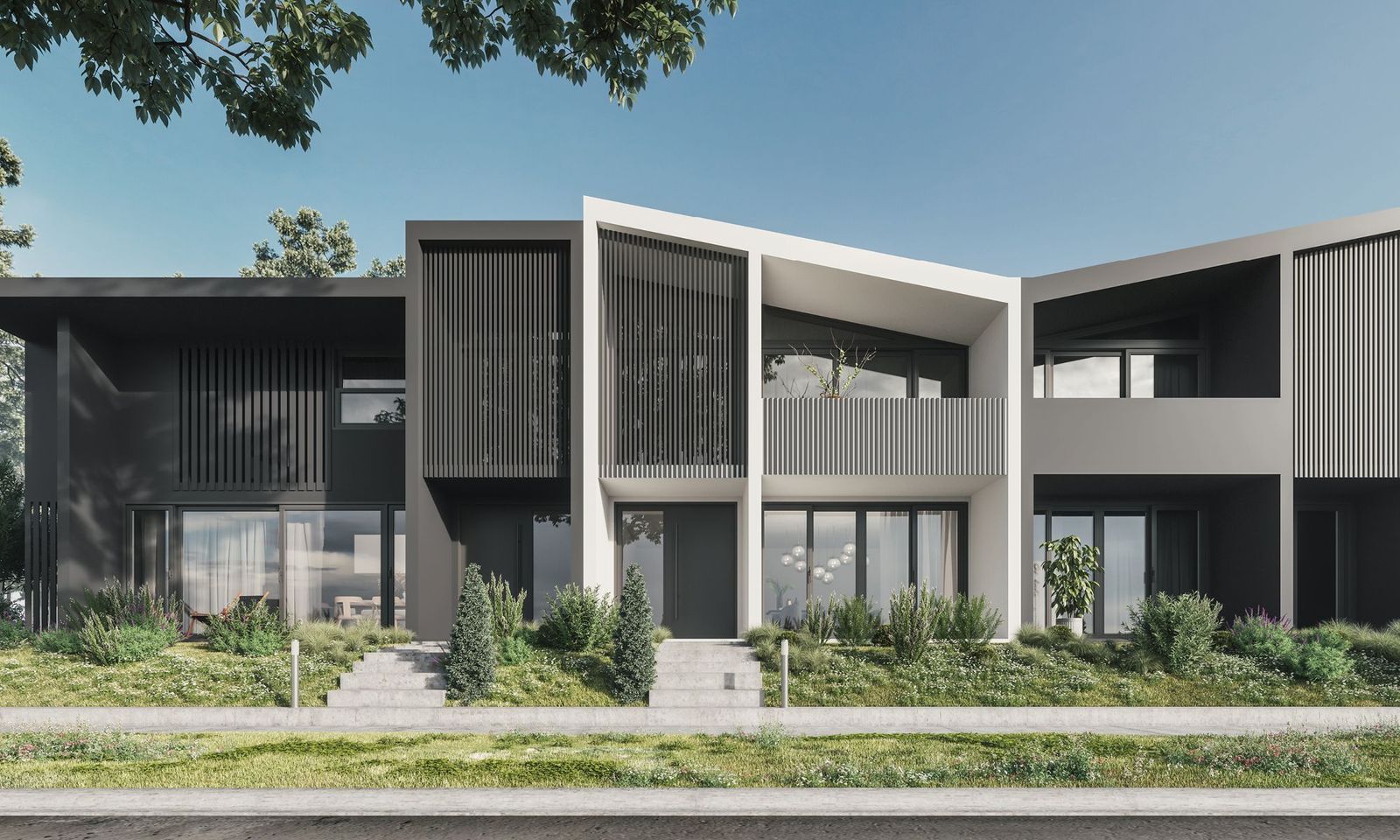
Why townhouses are Sydney’s new sweet spot
 Fact checked


Across Sydney’s low- to medium-rise (LMR) suburbs, we are seeing a clear shift in market interest, with many buyers actively seeking townhouses and terraces over freestanding homes or apartments, particularly in well-established areas with good schools, transport, and local centres.
According to Victor Gennusa, Head of Developments at DiJones, recent rezonings across Sydney are playing a pivotal role.
“Councils historically didn’t allow townhouses or terraces in many R2-zoned suburbs. That’s now changing, and it’s unlocking a new asset class that people have been waiting for,” he explains. “We’re finally filling the missing middle between apartments and freestanding homes.”
What a townhouse offers that apartments and houses can’t
Townhouses offer buyers an option that feels practical, modern and achievable, with an ideal mix of space, convenience and liveability.
A contemporary townhouse typically offers two or three levels, a private entry, a small but functional courtyard, and a genuine sense of home. Many include a flexible bedroom or home office at ground level, with additional bedrooms upstairs, allowing separation between living and resting zones. Storage is significantly better than in most apartments, and private parking is almost always included, a critical factor in car-dependent areas such as the Upper North Shore.
“They live like a home, not an apartment,” Gennusa says. “Buyers get the modern finishes, the natural light, the indoor-outdoor connection and the house-like feel without the upkeep that comes with a big block.”
Why different buyer groups are converging on the same product
Townhouses and terraces appeal to a wide range of buyers, from downsizers to young professionals and growing families, three groups with traditionally different needs who are increasingly turning to the same solution.
For downsizers, the attraction lies in the gentler transition. Many are not ready to jump straight from a large family home to an apartment, and a townhouse offers an excellent alternative, with enough space for visiting family, private parking, low-maintenance outdoor areas for gardening or light entertaining and a house-like feel without the overwhelming upkeep.
Young professionals often prioritise locations close to transport, retail and green spaces, valuing lock-and-leave living that delivers the privacy, entertaining potential and design quality often missing in most older apartment stock.
Young families, meanwhile, are looking for room to grow, with additional bedrooms, more storage, a safe street feel and proximity to parks and schools. For them, a townhouse feels like a “real home” in a way that many apartments simply cannot replicate.
Across all groups, Gennusa observes three consistent non-negotiables: “A house-like feel with proper parking, proximity to amenities and an outdoor area that’s easy to maintain. Those are the constants.”
Apartment fatigue is real
While the rise of townhouses is a positive trend, it is also a response to growing dissatisfaction with certain parts of the apartment market. Buyers increasingly cite noise issues, limited storage, high strata costs, and the lack of private outdoor space, and many smaller two-bedroom apartments struggle to meet modern standards of acoustic privacy or functional layouts, particularly for hybrid workers or young families.
Townhouses address many of these pressure points, enhancing well-being and day-to-day comfort for many new homeowners.
LMR suburbs are a natural fit
Low- to medium-rise (LMR) zones are often well served by schools, retail, rail lines and parks, making them ideal for this form of housing. The Upper North Shore is an example of this shift. Long regarded for its established streets and strong community character, it is now seeing interest in townhouse living surge as rezonings open new pathways for development.
“LMR suburbs with good walkability and strong amenities are perfect for townhouses,” Gennusa says. “They feel like a natural evolution of the area rather than a dramatic change in built form.”
Townhouses also sit more comfortably within existing streetscapes than larger apartment buildings. Their scale, materials and façade articulation can echo local character, particularly when developers take cues from the neighbourhood, such as the Georgian or heritage-influenced designs we are seeing on the Upper North Shore, for example.
A value proposition that resonates
While price sensitivity is a factor across the whole market, the shift toward townhouses is not just about affordability. Buyers see value in the balance of space, privacy and convenience. They want modern quality and durable construction, and they want a place that feels like a home without requiring constant maintenance.
Townhouses also offer a compelling resale story. Because they appeal to a broad range of buyers, they remain highly marketable over time. “Townhouses sit in a real sweet spot,” Gennusa notes. “They give buyers more space and privacy than an apartment, with a broader resale market than a traditional family home.”
Not a passing trend
With housing prices shifting and more suburbs adopting LMR planning frameworks, the demand for townhouses is expected to remain strong. Gennusa believes the trend is structural rather than cyclical.
“This isn’t a fad. Townhouses and terraces will become the new normal in many premium suburbs,” he says. “They give first home buyers and downsizers a chance to stay in the suburbs they love, with a house-like lifestyle and much lower upkeep.”
As Sydney’s property markets continue to evolve, the missing middle may well become the epitome of desirable living, defined by practical, adaptable homes that are closely connected to the heart of their neighbourhoods.
Disclaimer
DiJones Real Estate, together with their directors, officers, employees and agents have used their best endeavours to ensure the information passed on in this document is accurate. However, you must make your own enquiries in relation to the information contained in this document and seek advice from your financial advisor, broker or accountant to ascertain its application to your circumstances.
This information is provided subject to our Terms and Conditions.
Was this content helpful to you?